What Makes a Space Dementia-Friendly, and Why Is It Essential in Elder Care?
Team Epoch, Epoch Elder Care
When we think about caring for someone living with dementia, our minds often go straight to medication schedules, cognitive therapies..
Ageing is a completely natural process that may be accompanied by subtle changes in memory, speed, and cognition. Forgetting where you placed your glasses or occasionally struggling to recall a name is normal. Signs of dementia, however, are not a part of normal ageing. Dementia is termed a progressive neurological condition that affects memory, reasoning, language, and the ability to perform daily activities.
Unlike the mild forgetfulness of ageing, dementia disrupts life in profound ways, altering personality, behaviour, and independence. Alzheimer’s disease is the most common form, but there are others, such as vascular dementia, Lewy body dementia, and frontotemporal dementia. Although each type presents differently, all require specialised, continuous care that adapts as the condition progresses.
Understanding this difference is crucial because while ageing can be supported by family and occasional assistance, dementia needs structured clinical oversight, trained caregivers, and environments specifically designed to provide safety and dignity.
Caring for someone with dementia involves far more than attending to their physical health. It requires a 360-degree approach that balances medical, emotional, psychological, and environmental needs. At its core, dementia care involves:
Such care cannot be generalized. It must be tailored, and that’s where dementia specialists play an indispensable role.
Dementia specialists are trained professionals, often clinicians, psychologists, or senior caregivers, who possess expertise in the medical, behavioural, and psychosocial aspects of dementia. Their role extends beyond diagnosis and treatment; they are the link between the elder’s clinical needs, emotional well-being, and the caregiving team’s training and preparedness.
They bring together a nuanced understanding of how dementia manifests differently in each individual and how the environment and care strategies must evolve.
Long-term care facilities, especially those like Epoch Elder Care homes, are designed to offer holistic, residential support to elders who need 24/7 care. Within these settings, dementia specialists ensure that care delivery is not just routine but responsive and evidence-based. Their roles include:
Dementia specialists regularly assess residents’ cognitive and physical health, monitor disease progression, and collaborate with doctors and therapists to modify care plans. Early recognition of changes, such as increased confusion or withdrawal, allows timely intervention and prevents crises.
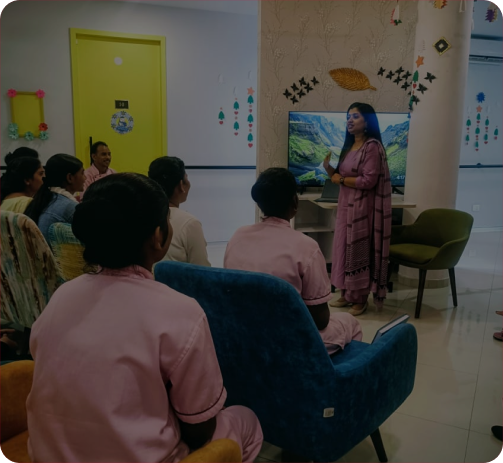
They play a critical role in training caregivers to recognise subtle behavioural cues, respond calmly to agitation, and communicate effectively. This ongoing capacity-building ensures that every caregiver can deliver empathetic, informed care, not just mechanical assistance.
Dementia often comes with mood swings, aggression, or anxiety triggered by confusion or fear. Specialists help design non-pharmacological interventions through validation therapy, redirection, sensory engagement, and gentle communication to reduce distress and promote calm.
Families often struggle to understand the trajectory of dementia or feel guilt about placing loved ones in care. Dementia specialists bridge this gap by educating families about the condition, providing emotional support, and involving them in care decisions, thus maintaining a sense of connection and trust.
From doctors and nurses to physiotherapists, psychologists, and nutritionists, dementia specialists ensure seamless coordination among all professionals involved in an elder’s care. This holistic collaboration prevents fragmented treatment and ensures that every intervention aligns with the elder’s overall well-being.
One of the most overlooked aspects of dementia care is the environment. Specialists work closely with facility designers and managers to create dementia-friendly spaces that support orientation, safety, and calm.
These include:
A thoughtfully designed environment, combined with personalised care, allows elders to live with dignity, rather than feeling confined or dependent.
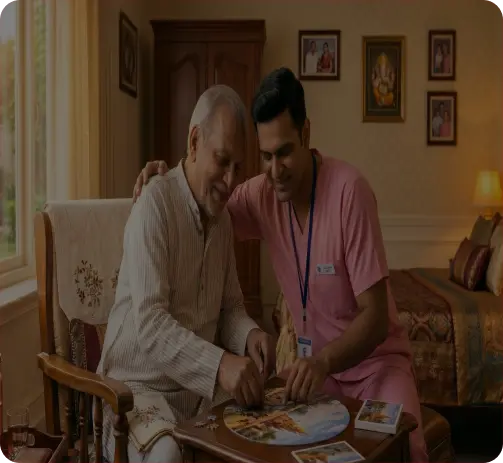
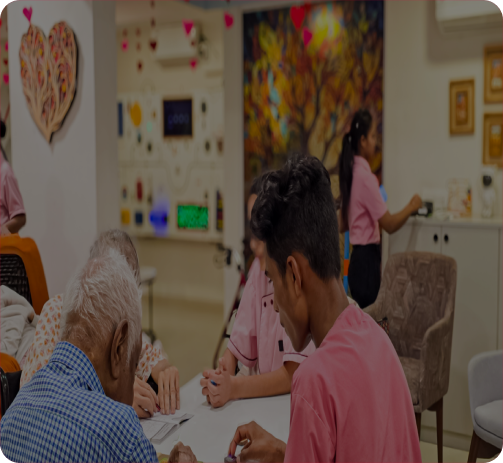
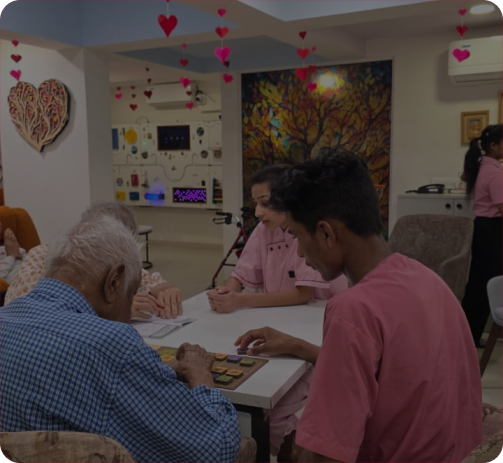
Dementia specialists understand that quality of life depends not just on medical management, but also on emotional enrichment. Engagement activities are curated to match the resident’s cognitive level and personal interests: art therapy, music sessions, reminiscence circles, light physical exercises, or simple gardening.
These experiences awaken positive emotions, trigger familiar memories, and reduce anxiety. Group activities encourage social connection, which can significantly slow cognitive decline.
A well-trained specialist knows how to gently guide these activities, observe responses, and adjust the approach to sustain comfort and joy.
The ultimate goal of dementia care is to preserve quality of life, even as memory fades. Dementia specialists are central to this mission. They help ensure that every elder continues to experience:
Their expertise helps reframe dementia care from a clinical obligation to a compassionate partnership, one that recognises the person behind the diagnosis.
Modern long-term care facilities are increasingly using technology to support dementia specialists, from electronic health records to behavioural tracking systems. These tools provide data on sleep, nutrition, mobility, and mood patterns, helping specialists identify subtle changes early.
Wearable devices and safety sensors can alert staff to movement anomalies or wandering behaviour, enhancing safety without compromising autonomy. Dementia specialists interpret this data and integrate it into personalised care strategies.
Despite their importance, dementia specialists often face challenges such as caregiver burnout, limited awareness about dementia in society, and the emotional toll of working with progressive decline.
Facilities that prioritise mental health support, team debriefing sessions, and continuous professional development help sustain these specialists and ensure consistent quality of care.
The presence of supportive leadership, such as clinical heads and care coordinators, also reinforces a collaborative and compassionate culture within the home.
In exemplary long-term care settings, dementia care is not confined to a single department; it becomes a shared ethos. Every caregiver, housekeeper, and staff member understands how to approach elders with patience, respect, and empathy. Dementia specialists anchor this ethos, ensuring that care delivery remains consistent, person-centred, and aligned with best practices.
This approach transforms the care home into more than a residence; it becomes a therapeutic environment where elders feel secure, valued, and understood.
Dementia changes lives, not just for those diagnosed, but for families and caregivers too. As the condition progresses, what truly makes a difference is the presence of dementia specialists who bring clinical precision, emotional intelligence, and a deep sense of empathy to care.
In long-term care facilities, they are the silent anchors ensuring that each elder’s journey is met with comfort, respect, and dignity. Their work reminds us that while dementia may take away memories, it should never take away humanity.
When expertise and empathy meet, care becomes not just treatment, but a way of restoring meaning to everyday.
Check out some of our Blogs!